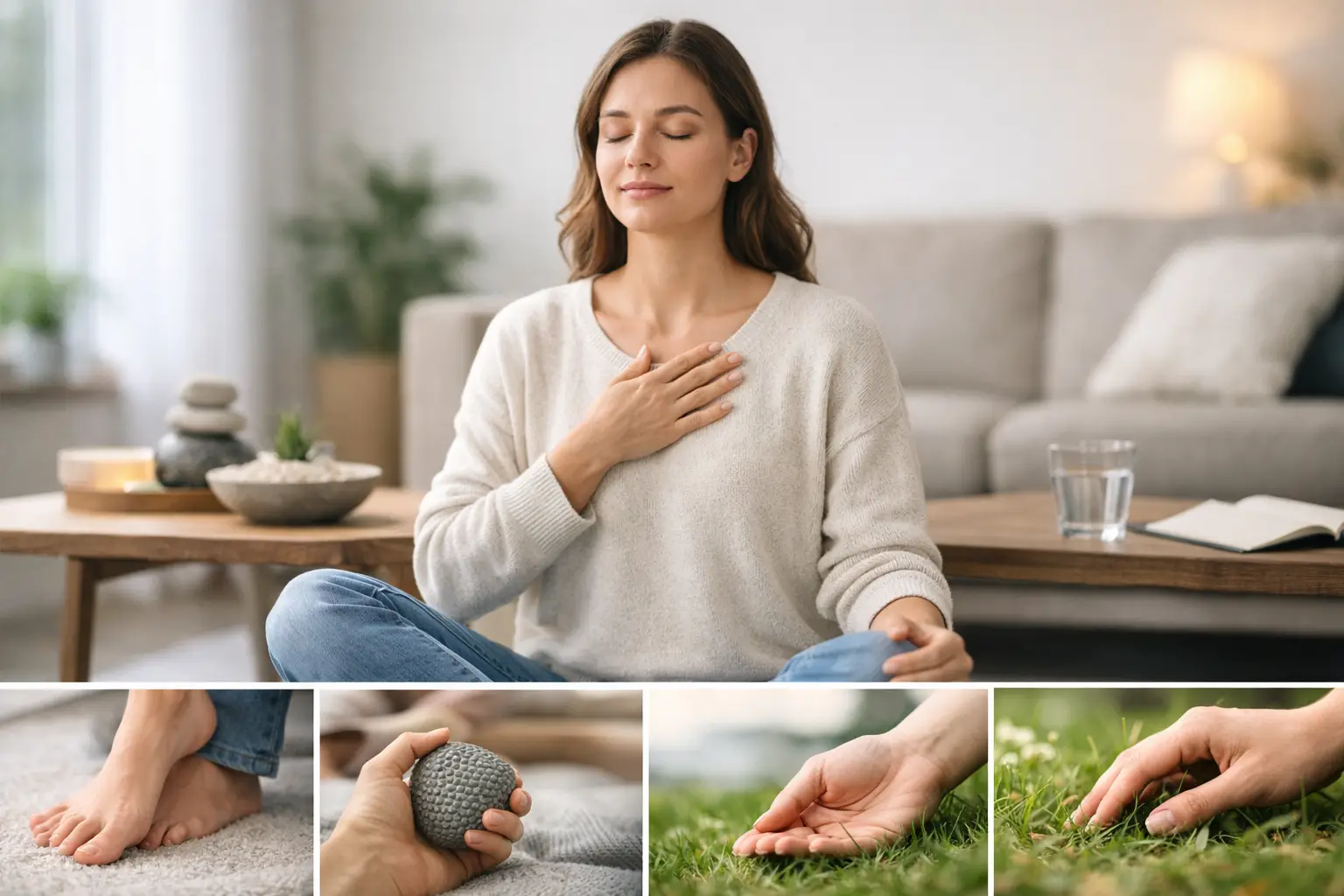
9 Grounding Techniques for Anxiety That Help
Your heart is racing, your thoughts are sprinting ahead, and even a familiar room can suddenly feel far away. In moments like these, grounding techniques for anxiety can offer something simple but meaningful: a way to reconnect with the present instead of trying to solve every anxious thought at once.
Grounding is not about forcing yourself to calm down or pretending that what you feel is not real. It is a set of practices that helps your nervous system notice, "I am here. I am safe enough in this moment. I can take the next small step." Some techniques work quickly in public. Others are better for quiet moments at home. The goal is not perfection. It is finding what helps you return to yourself with a little more steadiness.
What grounding does when anxiety takes over
Anxiety often pulls attention toward the future: What if this goes wrong? What if I cannot handle it? What if this feeling never stops? Grounding gently redirects your attention toward information your body can verify right now, such as what you see, touch, hear, or feel beneath your feet.
That shift does not erase a real problem or replace professional support. It can, however, create enough space to choose your response rather than feeling completely swept away by alarm. Think of grounding as a coping skill you can use alongside therapy, medication, rest, supportive relationships, or other care that is part of your well-being.
9 grounding techniques for anxiety
1. Try the 5-4-3-2-1 sensory exercise
Look around and name five things you can see. Then notice four things you can feel, three sounds you can hear, two things you can smell, and one thing you can taste. You do not need to find anything special. The texture of your shirt, the hum of a refrigerator, or the taste of water all count.
This practice is useful when thoughts are looping because it gives your attention a clear, gentle job. If naming items feels too noticeable in public, do it silently or focus only on three things you can see and three things you can feel.
2. Feel your feet meet the floor
Place both feet on the ground and press them down slightly. Notice the support beneath you. You might shift your weight from heel to toe, gently wiggle your toes in your shoes, or describe the sensation in your mind: firm, cool, carpeted, steady.
This is one of the most discreet options for a meeting, waiting room, store, or conversation. Anxiety may still be present, but your body receives a reminder that it has something solid to lean on.
3. Hold something with texture or temperature
A cool glass of water, a smooth stone, a soft blanket, a key ring, or the fabric of your sleeve can become an anchor. Focus on details: Is it rough or smooth? Heavy or light? Cool or warm? Let your attention stay with the object for several slow breaths.
Strong temperature can be helpful for some people, but it is not necessary. Choose something comfortable and safe. The point is not to shock yourself out of anxiety. It is to give your senses clear information from the present moment.
4. Describe your surroundings like a kind observer
Quietly narrate what is around you without judging it. You might say, "I am sitting near a window. There is light on the wall. My hands are resting in my lap. I hear a car outside." Keep the language factual and simple.
This technique can be especially supportive when you feel detached, unreal, or mentally foggy. Describing what is true right now helps orient you without demanding that you explain why you feel anxious.
5. Lengthen your exhale, gently
Take a comfortable breath in, then allow the exhale to be a little longer. For example, breathe in for three counts and out for four or five. Repeat for a minute or two, without straining or forcing a deep breath.
For some people, focusing closely on breathing can increase anxiety, particularly during panic. If that is true for you, skip this one. You might pair a natural breath with a tactile practice instead, such as feeling your feet on the floor or holding a cool cup.
6. Name what is happening with compassion
Try a simple phrase: "I am noticing anxiety." Or, "My body is having an alarm response, and I can support myself through this moment." Naming the experience can reduce the pressure to fight it.
This is not positive thinking. It is a way to separate yourself from the feeling. Anxiety is something you are experiencing, not your whole identity and not proof that you are failing.
7. Use gentle movement to reconnect with your body
Roll your shoulders, stretch your fingers, walk slowly across the room, or place one hand over your chest and one over your abdomen. Notice how your muscles move and how your body occupies space.
Movement may be more helpful than sitting still when anxiety brings restlessness or a surge of energy. Keep it low-pressure. You do not need a workout or a perfect routine. Even thirty seconds of intentional movement can interrupt the sense of being stuck.
8. Choose a mental task that is simple and concrete
Count backward by ones or threes, name cities you know, list animals alphabetically, or identify every color you can spot in the room. Pick a task that requires enough attention to interrupt spiraling but not so much that it becomes frustrating.
This can be a useful tool during a commute, before an appointment, or while waiting for anxiety to ease. If counting makes you feel pressured, switch to something more sensory. Grounding should feel supportive, not like another test to pass.
9. Reach for a familiar phrase or memory
Keep a short grounding statement in your phone or on a note in your wallet. It might be, "This feeling is hard, and it will shift," or, "I can take one moment at a time." You can also picture a place where you have felt cared for, steady, or connected.
A comforting memory will not fit every moment, especially if your anxiety is linked to painful experiences. When imagery feels activating rather than soothing, return to what is concrete: the chair beneath you, the air in the room, or the feel of an object in your hand.
How to make grounding easier to use
Grounding skills tend to work best when you practice them before you are at your most overwhelmed. Try one technique for a minute while you are relatively calm. This helps your brain recognize the practice later, when accessing coping tools may feel harder.
It can also help to build a small personal menu. Maybe you use the feet-on-the-floor practice at work, a textured blanket at night, and a brief walk when you feel restless. What supports you may change from day to day. That is not a sign you are doing it wrong. It is a normal part of learning what your mind and body need.
If a technique does not help, meet that information with curiosity rather than criticism. Some people need quiet sensory focus; others need movement, connection, or professional support to feel more regulated. Anxiety is not one-size-fits-all, and neither are coping skills.
When anxiety needs more support
Grounding can be a valuable first response, but it is not meant to carry everything alone. Consider reaching out to a licensed mental health professional if anxiety is persistent, disrupts sleep or daily life, leads you to avoid things you value, or feels increasingly difficult to manage. You deserve support that meets the full weight of what you are carrying.
If you are in immediate danger, have thoughts of harming yourself or someone else, call 911 or go to the nearest emergency room. You do not have to face an urgent moment by yourself.
For now, choose one small practice to try. Feel the floor beneath your feet, name what you see, or hold something cool in your hand. You are not required to have the whole path figured out. This next steadying moment is enough.



Comments